
Depicting Old Age in Late Antiquity
Starting Point
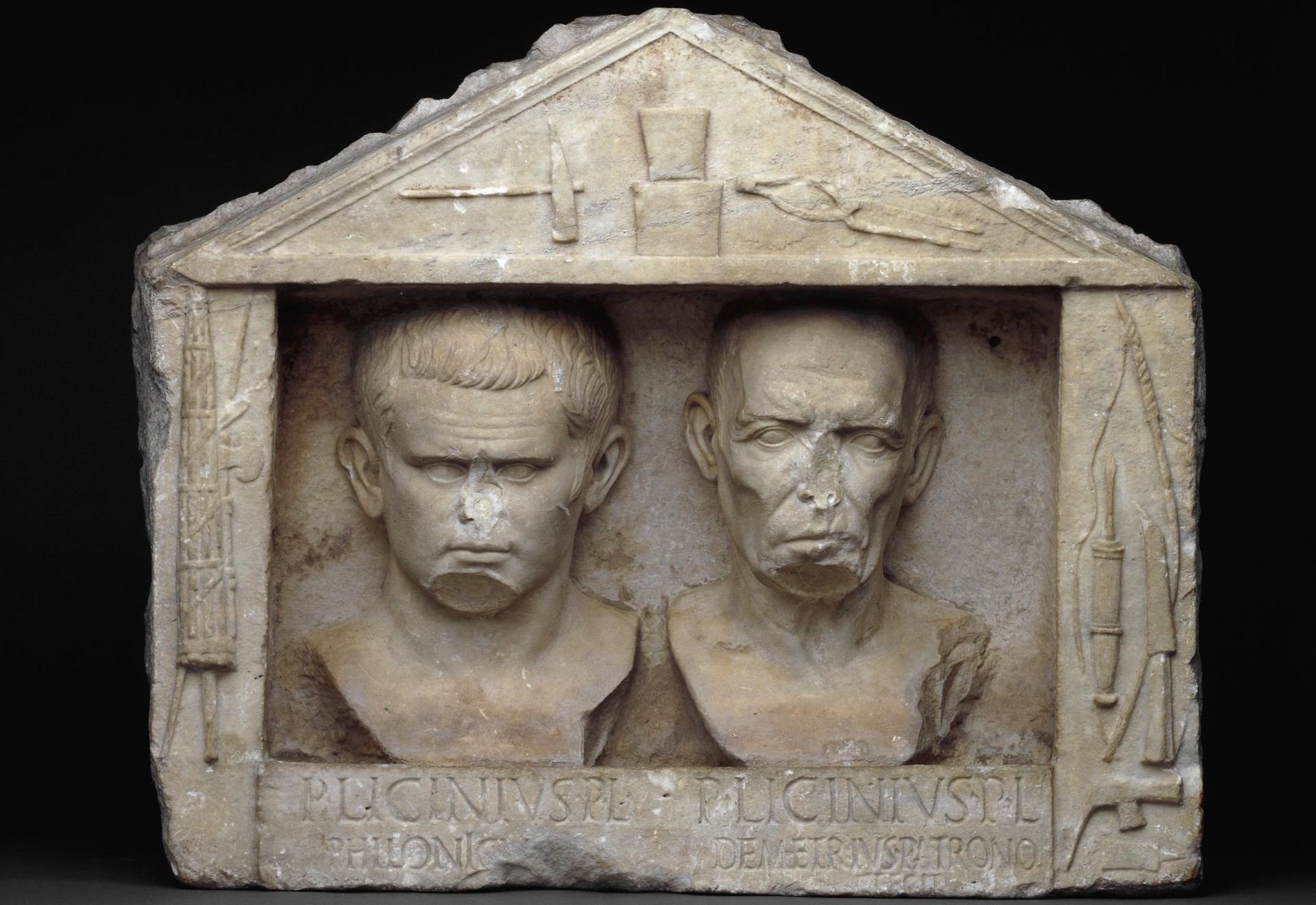
Changes in the perception of aging and old age witnessed in Late Antiquity (4th to 6th cent.) are reflected in various artistic media. Together with performances and speeches, representations were a key way to reinforce old and introduce new views to the overwhelmingly illiterate population of the later Roman Empire (ca. 85% illiterate). Thus, the art commissioned by civic or religious authorities can be seen as translating visually the image of old age they sought to promote and, thus, complements information preserved in written sources. Representations, however, also shed light on how non-literate individuals related to the latter phase of biological life. Commissioned by individuals from all walks of life, portraits and even more complex representations allow us to reconstruct how they understood old age and, most importantly, to identify changes in its perception that are specific to late antique society.
The Visual Dimension of Ageing
How did the rise of Christianity impact the visual representation of old age?
Approach
We explore how art contributed to and reflected changes in the perception of aging and old age in a sequential manner, as follows:
1. document in systematic manner depictions of aged people in all media (i.e., pottery, painting, mosaic, sculpture) from all regions of the Roman world;
2. identify recurrent and changing patterns in the representation of old age;
3. consider their meaning in dialogue with (a) RomAge’s three other foci and (b) against the background of late antique culture.
In order for the particularities of the late antique period to come to the fore, we trace evolutions over a longer period of time, from ca. 100 BCE to ca. 600 CE.
Responsible Team Member

Dr. Vladimir Ivanovici
Vladimir is an Ancient and Art Historian focusing on Late Antique and Byzantine art and architecture.